
Black Marble Tile Restoration At Buckhead, Atlanta Luxury Shopping Center
Before & After
Drag the slider to see the transformation
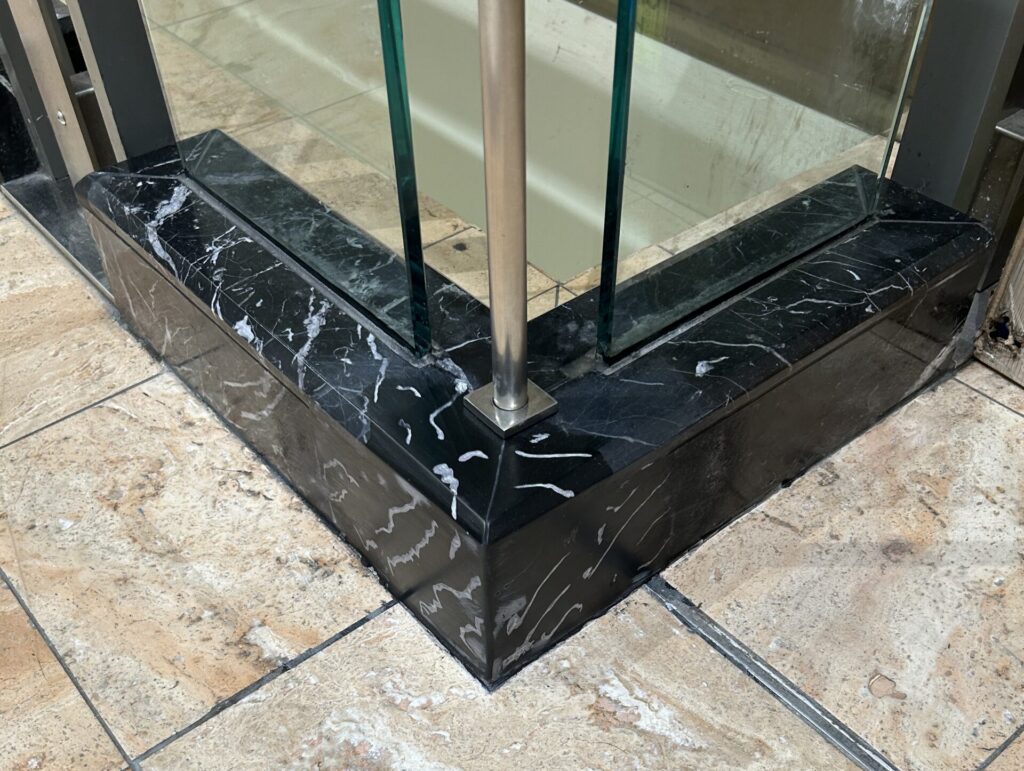
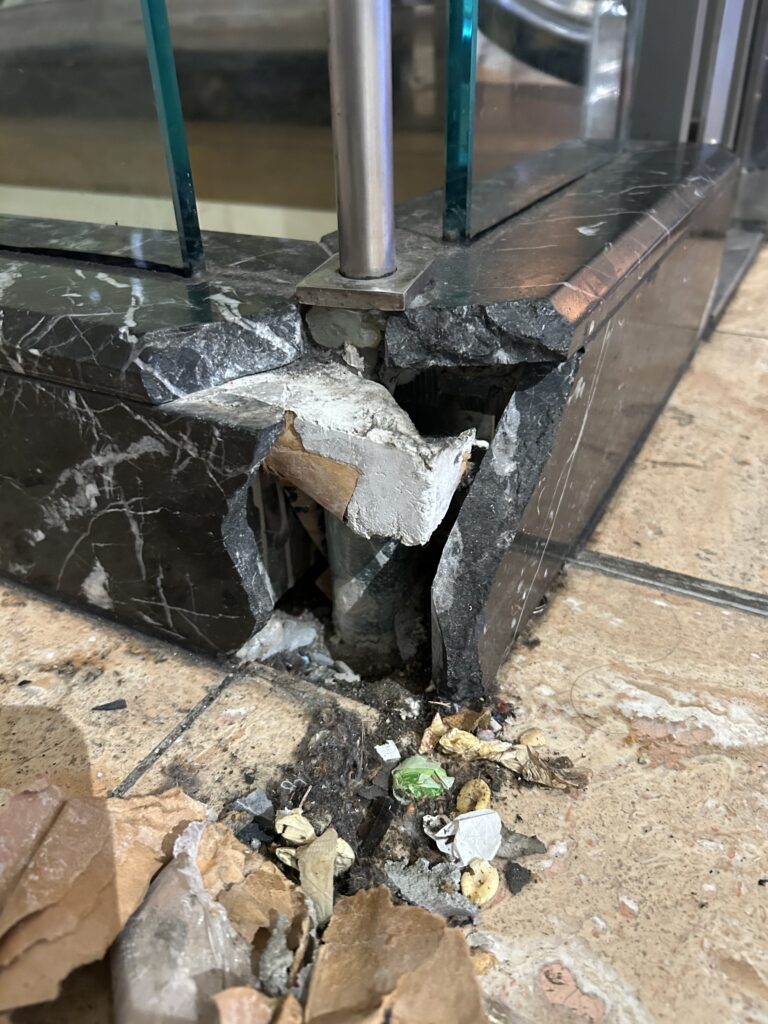
Please See Project Gallery Below
Marble base tiles in high-traffic commercial spaces take a beating. At this Luxury Shopping Destination in Buckhead, Atlanta, the black marble base tiles along the corridors had developed chips and missing sections — the kind of damage that stands out against an otherwise polished luxury environment. Replacing marble tile isn’t just expensive, it’s a logistical headache. Matching the original stone, coordinating demolition, dealing with lead times — none of that is fast, and none of it is cheap. The property team needed a solution that would restore the look without tearing anything out.
That’s exactly the kind of project we do best.
How We Approached the Restoration
Our team started by cleaning out the damaged areas — removing loose debris and any filler material that had broken down over time. Once we had a clean surface to work with, we patch-filled behind the remaining marble to create a solid foundation for the repair.
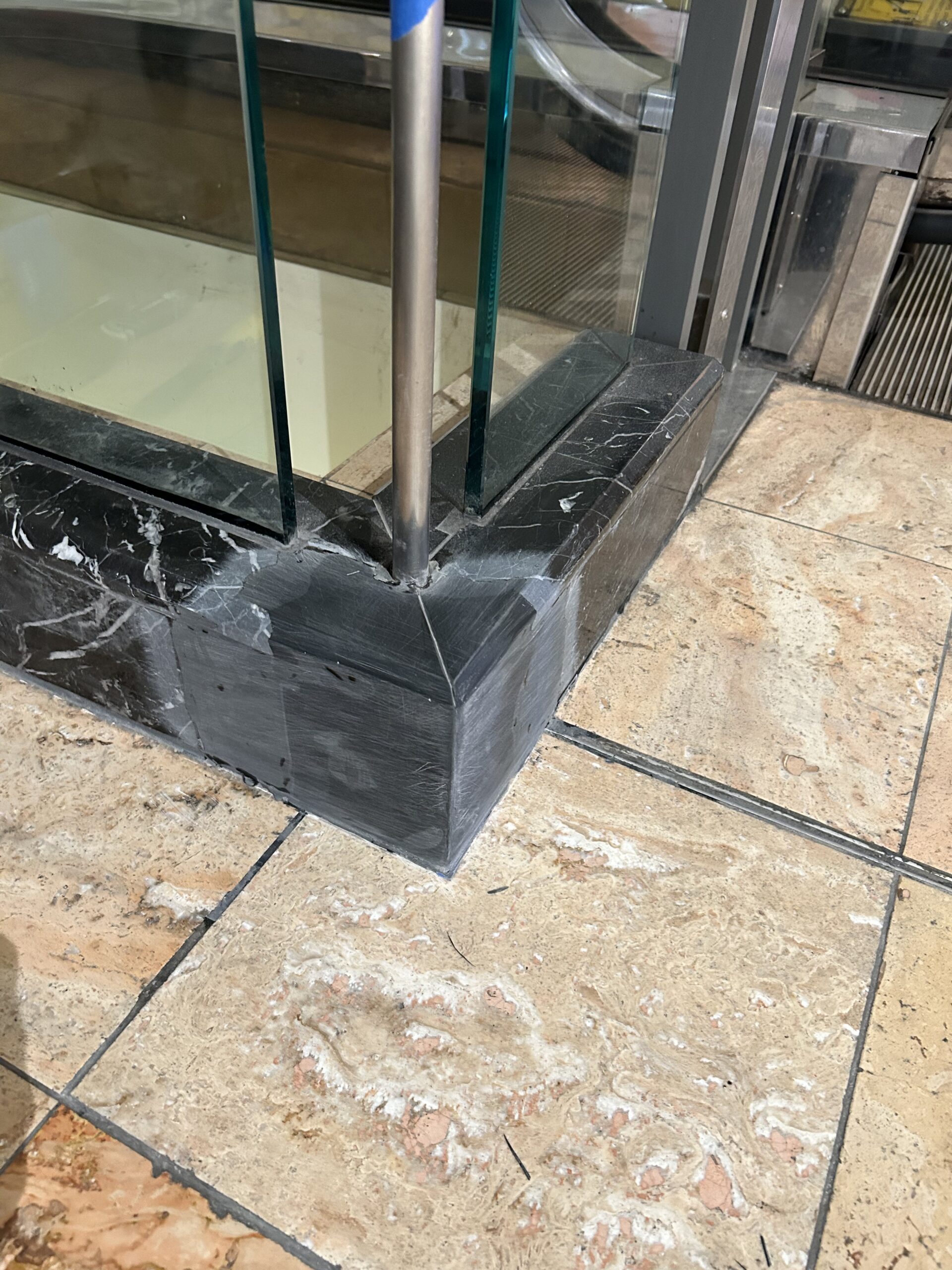
The real craftsmanship came next. We custom-built a form matched to the exact profile of the base tile, then poured a slow-cure black epoxy into the mold. Slow-cure is important here — it gives the epoxy time to settle evenly and bond properly, which means a stronger, longer-lasting repair. Once cured, we carefully removed the form and sanded the patch flush with the surrounding marble so the transition was seamless to the touch.
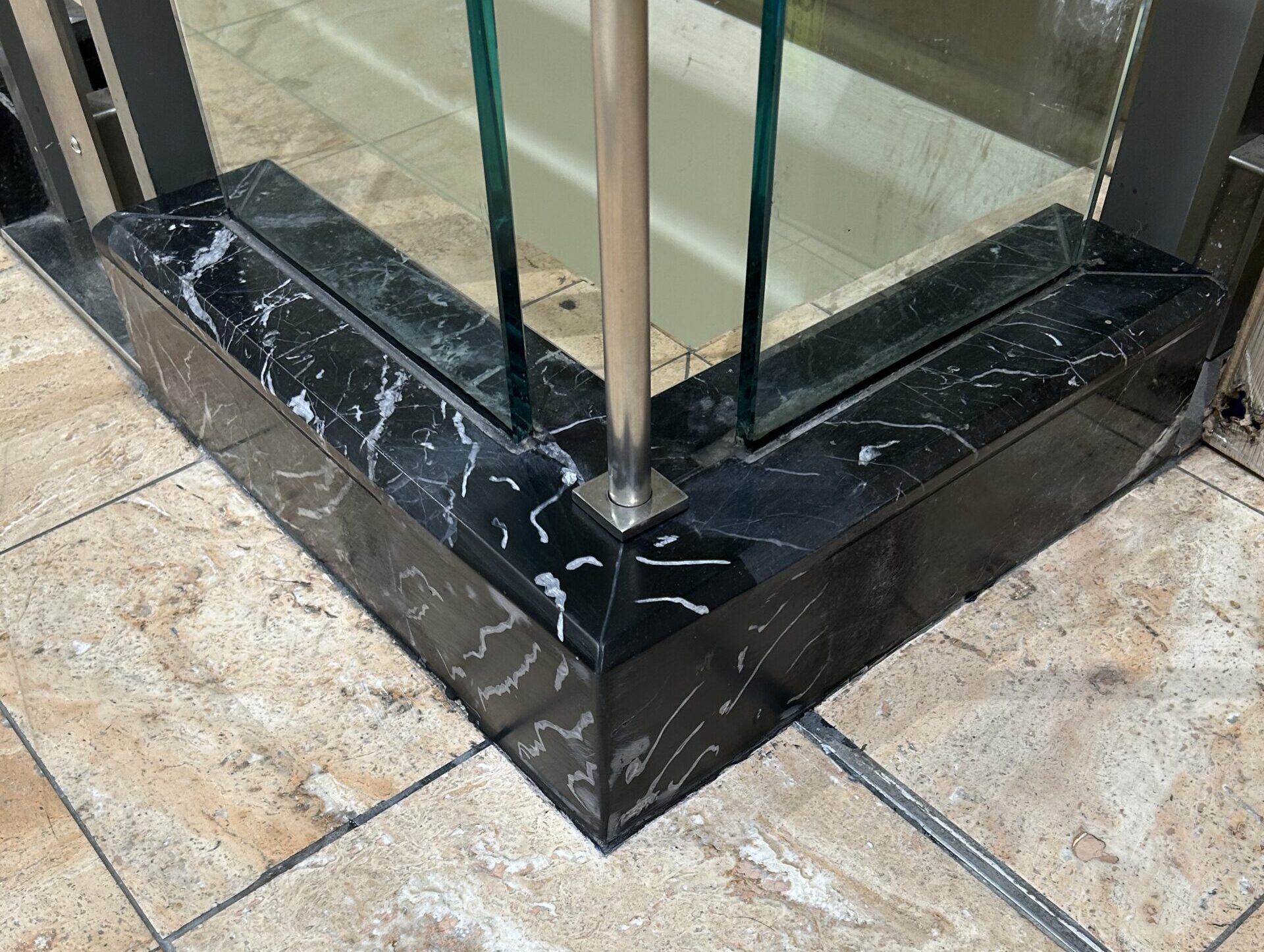
The final step is the one that separates a repair from a restoration: we hand-painted white veining directly onto the cured epoxy to match the natural pattern of the original black marble. This is detail work that requires an experienced eye and a steady hand — every marble slab has its own unique veining, so there’s no template. You match it by reading the stone around it.
The Result
The restored sections blend right in with the original marble. Unless you know exactly where the damage was, you wouldn’t spot the repair. That’s the standard we hold ourselves to — the work should be invisible.
For a property like this Luxury Shopping Center, where the finish quality reflects directly on the brands and tenants inside, maintaining that level of appearance matters. And doing it on-site, without removing or replacing tile, means zero disruption to foot traffic and a fraction of the cost of a full marble replacement.
Why This Matters for Property Managers
Marble damage in commercial spaces tends to get worse over time, not better. Small chips catch dirt, moisture gets behind loose sections, and what started as a minor cosmetic issue turns into a structural one. The smart move is to address it early with a targeted restoration rather than waiting until the only option left is full replacement.
If your property has marble surfaces showing wear — chipped base tiles, scratched countertops, damaged thresholds — we can likely restore them on-site without the cost or disruption of replacement. Reach out to us at sales@TouchUpMaestros.com or call our Atlanta office at 404-237-6000 to set up a property assessment.
Project Gallery
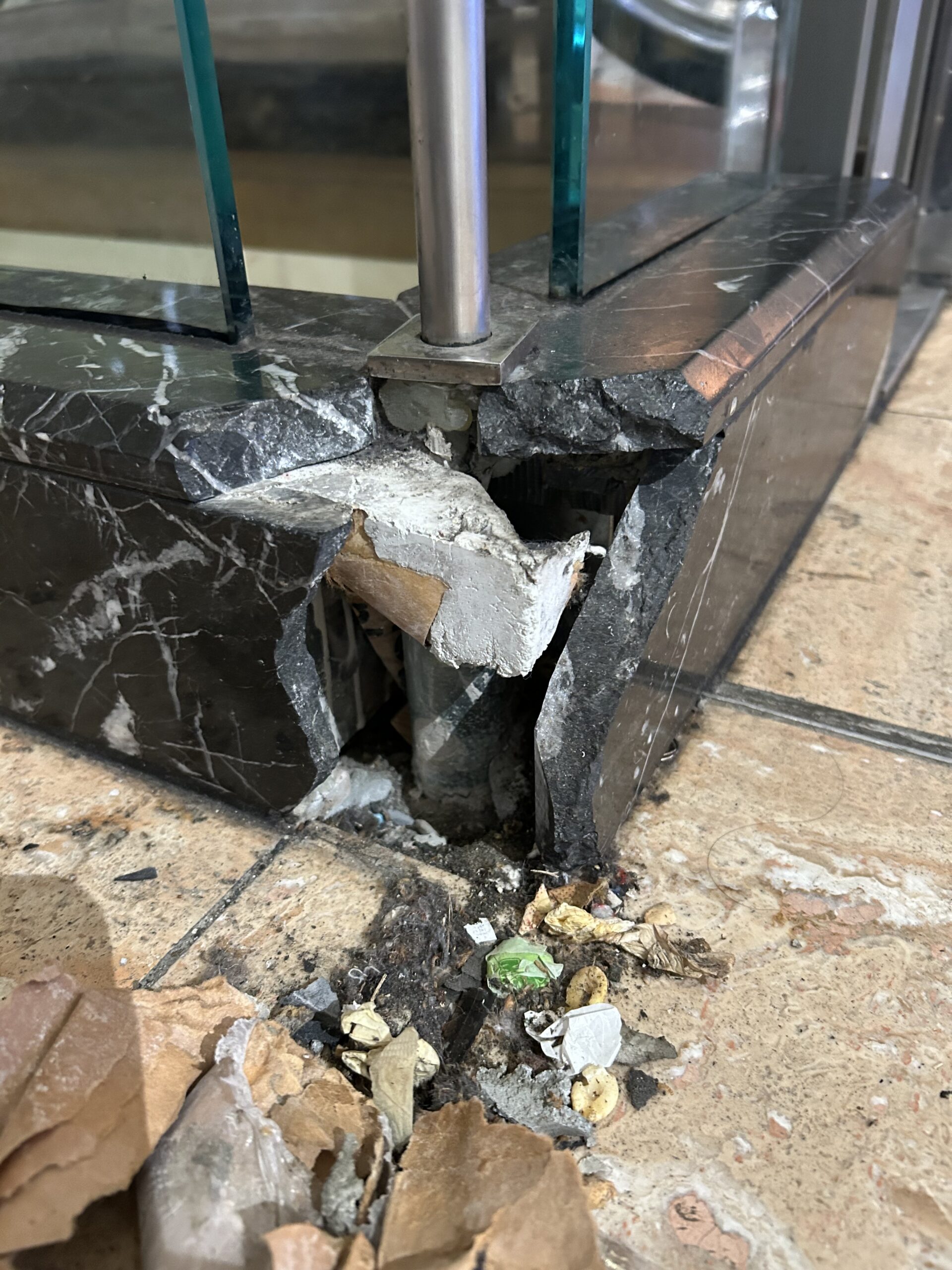 Before
Black Marble Base Tile, Clean Out Debris First
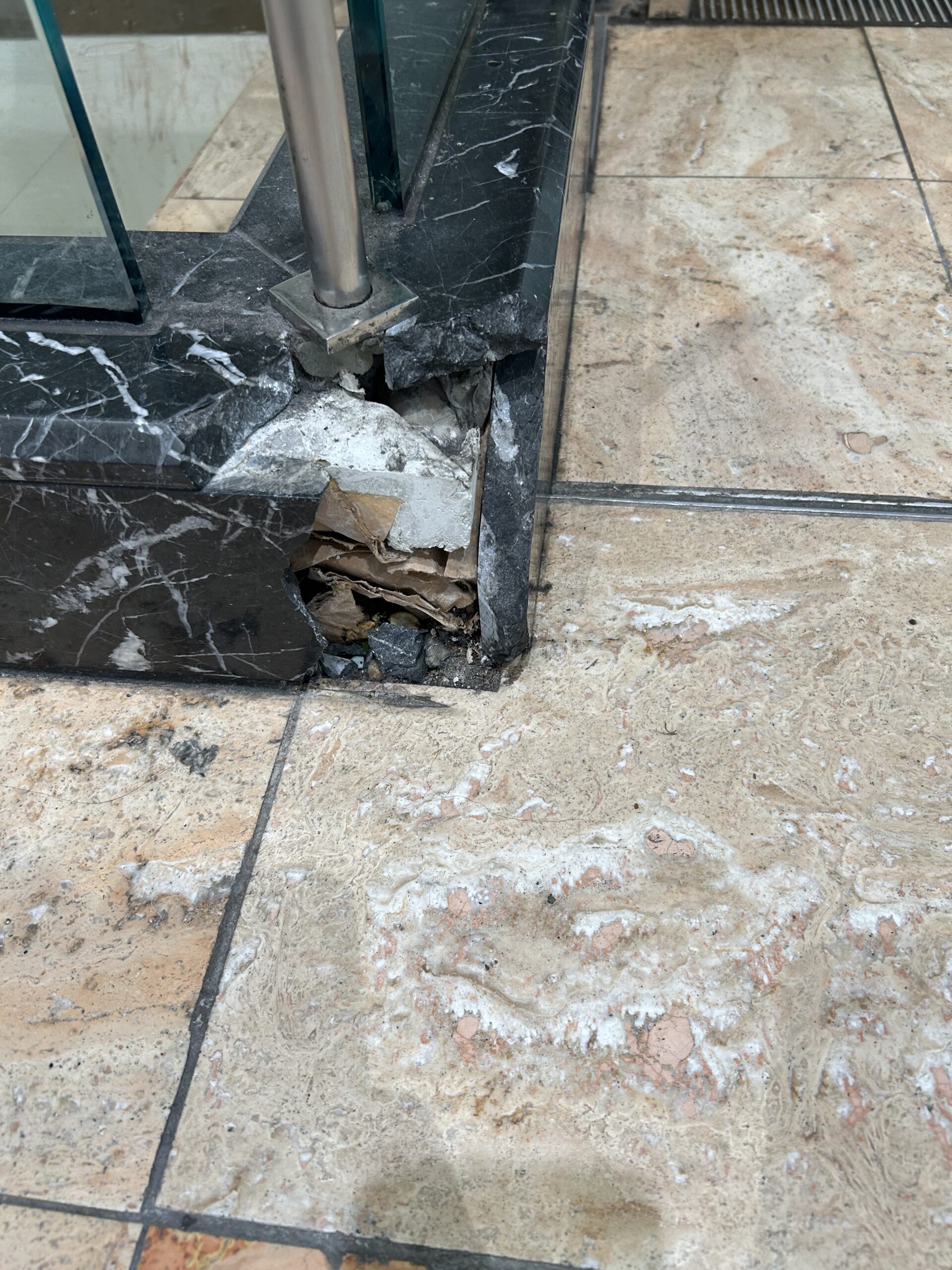 During
Black Marble Base Tile Restoration
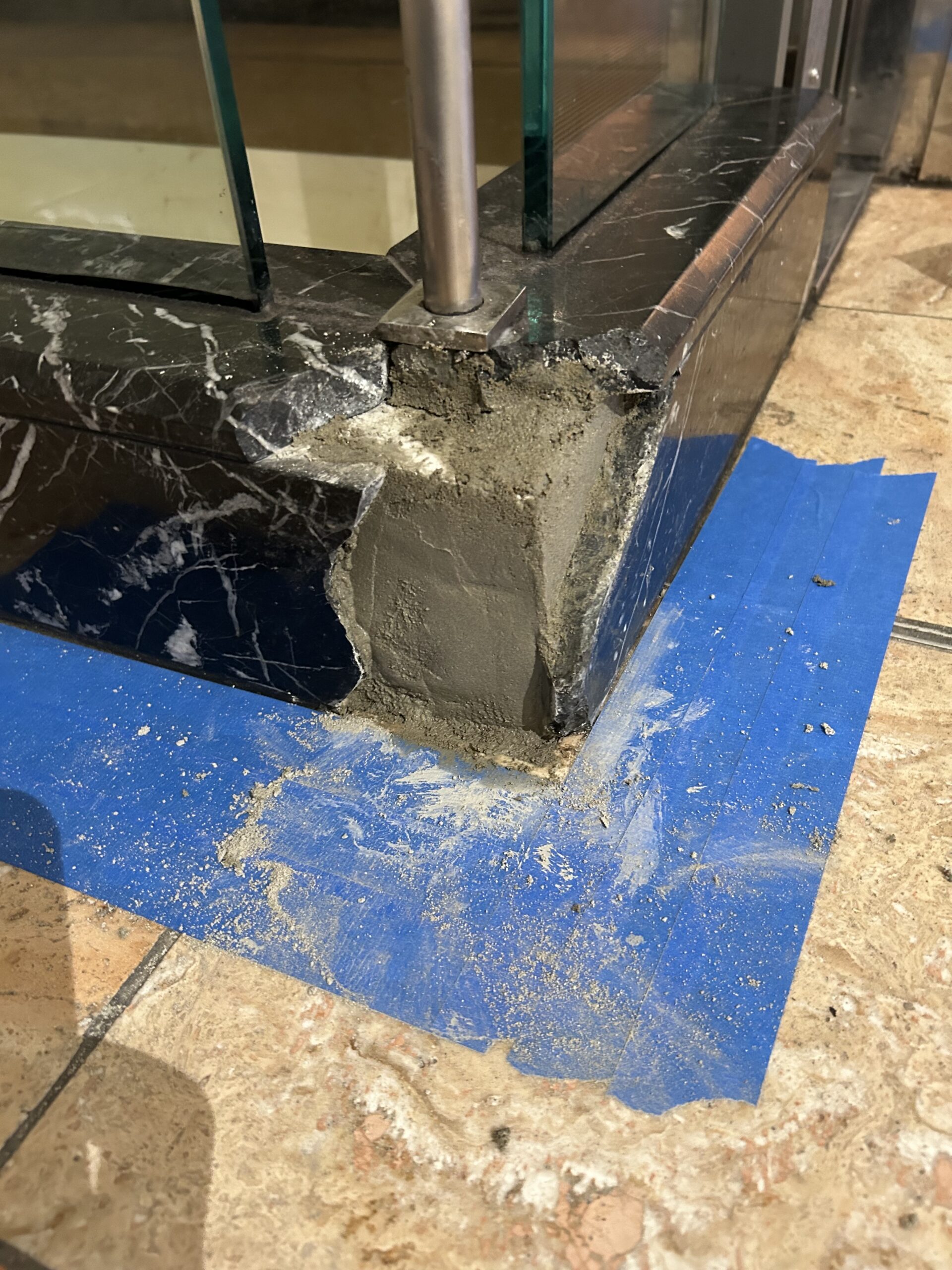 During
Patch Fill In Behind Marble
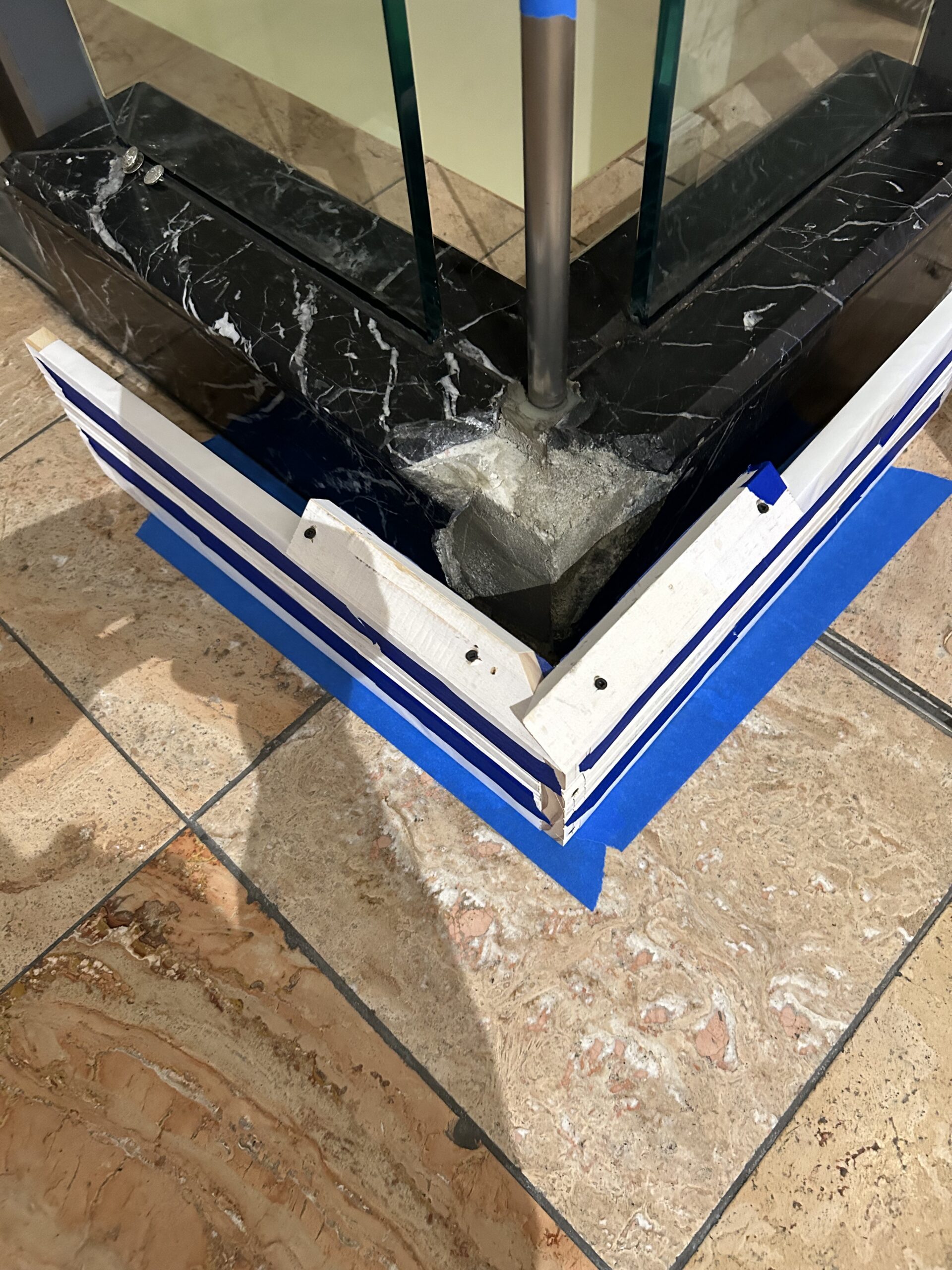 During
Custom Build Form For Pouring Slow Cure Black Epoxy
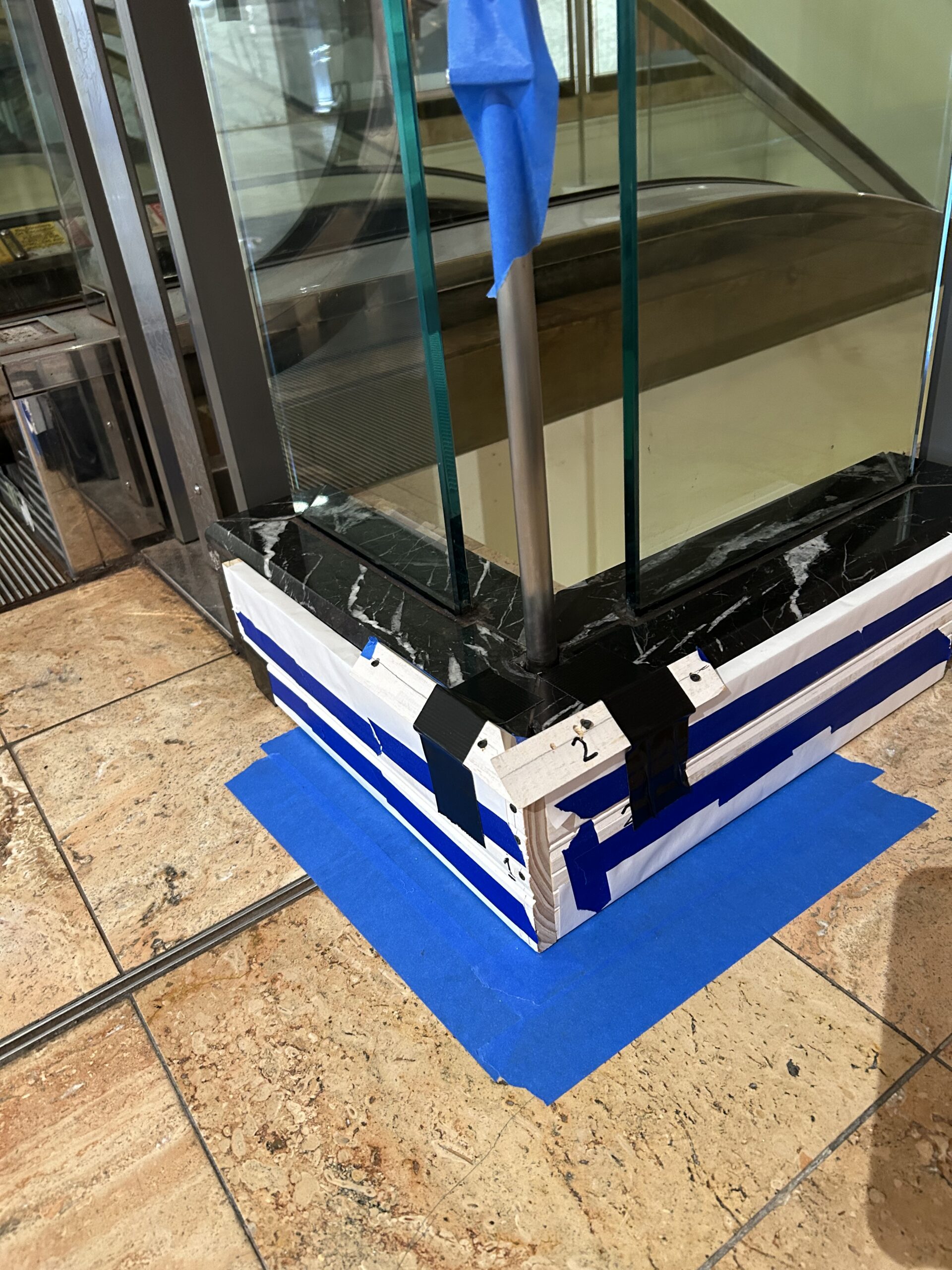 During
Set Form In Place and Tape Well
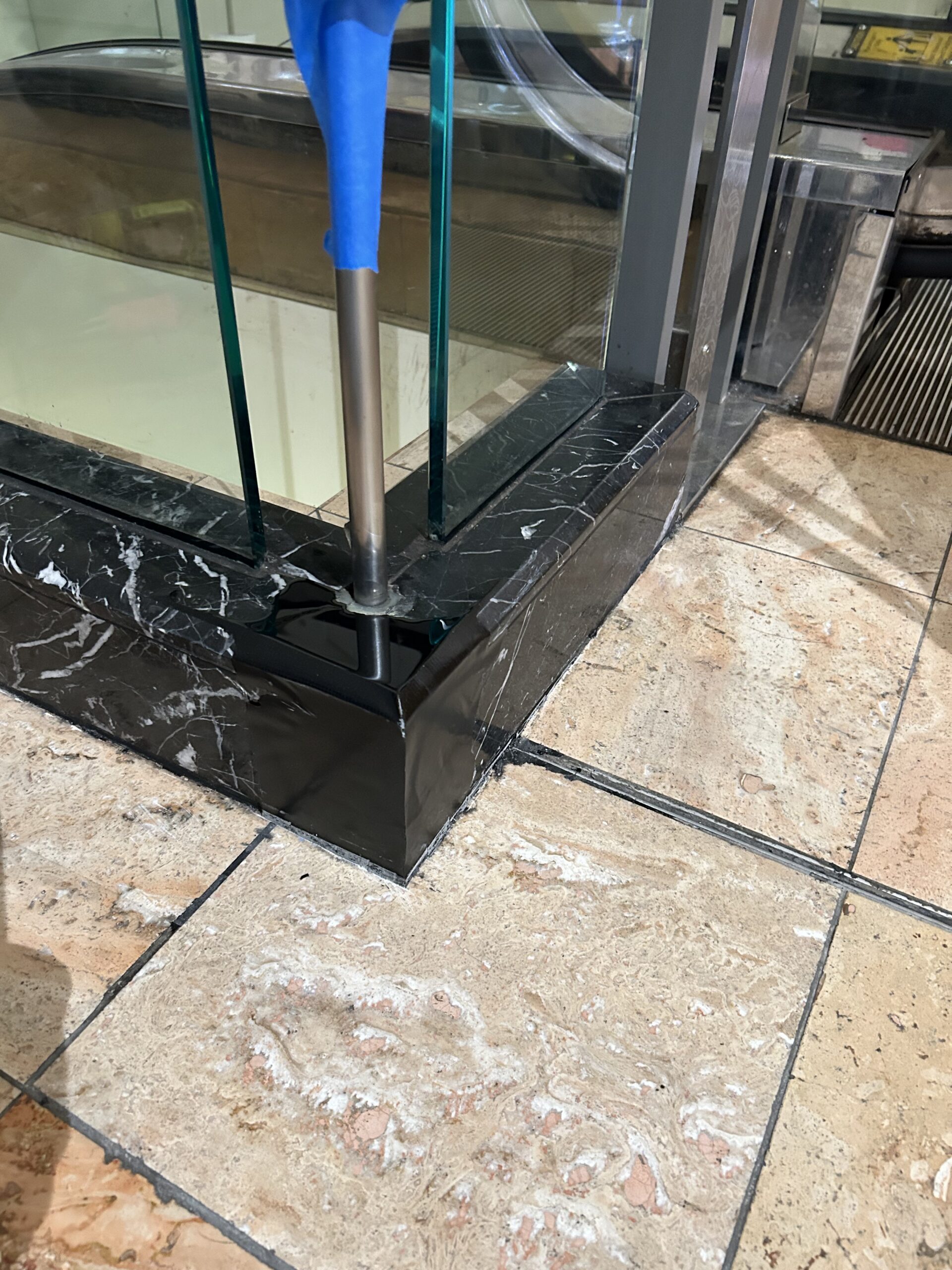 During
Carefully Pull Form Away
 During
Sanding to Level The Patch to Black Marble Base
 After
After
Blend In White Veining to Finish


Let's Discuss Your Project
Ready to restore the beauty of your space? Contact us for a free consultation.